SpaceX boosts Starlink network with Falcon 9 launch
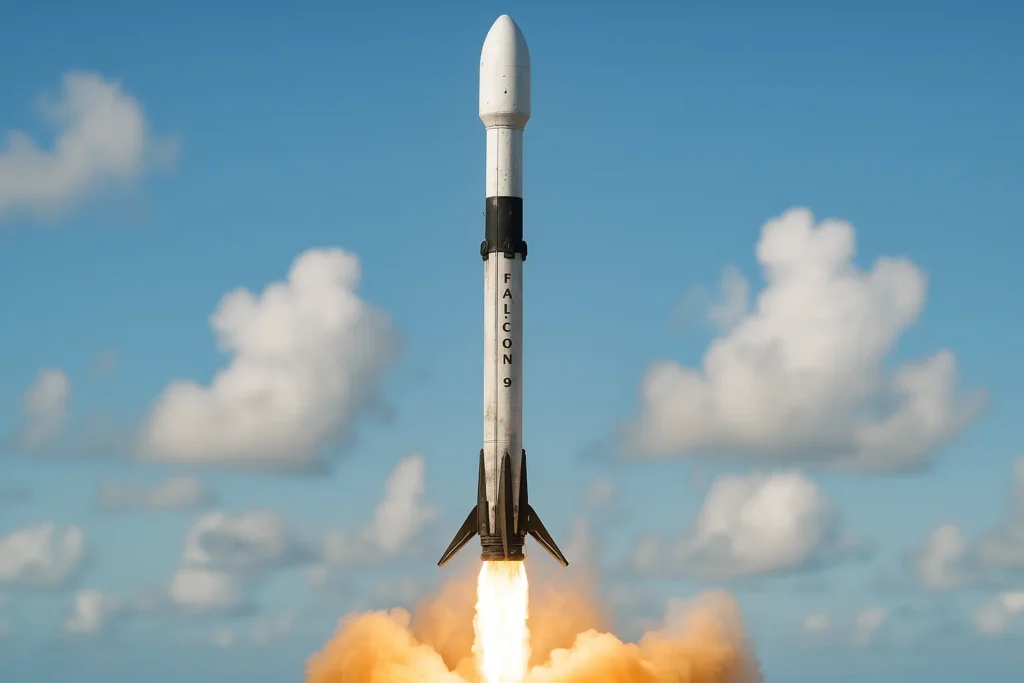
The relentless pace of SpaceX’s launches continues to be a landmark in the aerospace sector. As the company forges ahead with its ambitious plans, we take a closer look at the upcoming missions planned for the Starlink constellation and delve into the crucial details surrounding these groundbreaking launches.
Prochaines Missions Starlink
SpaceX‘s upcoming launches are poised to further bolster their Starlink satellite network, bringing us closer to a new era of global internet connectivity.
The next set of missions will see a series of Falcon 9 rockets take to the skies from various launch sites, each carrying a payload of small satellites that will contribute to the ever-expanding Starlink constellation.
Here, we delve into the specifics of these missions, highlighting the meticulous planning and precision that goes into each launch.
1st of May launch
On the evening of May 1st, at a window ranging from 18h51 PDT to 22h51 PDT, a Falcon 9 rocket is scheduled to lift off from Cape Canaveral. Its objective is to deploy 28 small satellites into a low Earth orbit, a critical addition to the Starlink 6-75 group.
With a budget of 52 million dollars, this mission not only underscores the substantial investment behind each launch but also the strategic importance of timely and successful deployments. The forecast promises 99% favorable weather conditions, with temperatures around 24°C, accompanied by cloud cover and winds at 20 km/h – ideal conditions for a launch.
Following the deployment, a recovery attempt of the Falcon 9’s first stage will be made on one of the Autonomous Spaceport Drone Ships (ASDS) stationed on the East Coast, highlighting SpaceX’s commitment to reusability and cost-efficiency.
2nd of May launch
The following day, May 2nd, another Falcon 9 is set to launch from Vandenberg between 11h27 PDT and 15h55 PDT. Its mission echoes the previous day’s objectives, focusing on delivering another payload of small satellites to enhance the Starlink 15-3 group.
Similarly budgeted at 52 million dollars, the mission will attempt the recovery of the first stage on the ASDS OCISLY positioned in the Pacific Ocean, showcasing SpaceX’s dual-ocean recovery strategy.
3rd of May launch
On May 3rd, the launch site returns to Cape Canaveral SFS, with a launch window from 18h40 PDT to 22h40 PDT. The goal remains consistent – deploying small satellites for the Starlink 6-93 group. As with its predecessors, this mission upholds the 52 million dollar budget.
The recovery strategy involves utilising one of the East Coast ASDS platforms, once again emphasising the seamless integration of launch and recovery operations.
Lancement du 4 mai
Concluding this series of launches, the May 4th mission from the Kennedy Space Center takes place between 01h48 PDT and 05h48 PDT. The deployment of small satellites for the Starlink 6-84 group will proceed as scheduled, and as usual, the 52 million dollar investment demonstrates the commitment to maintaining a robust satellite network.
The first stage recovery will attempt another landing on the ASDS, continuing the pattern of reusability and sustainability that defines SpaceX’s operational philosophy. The sequence of launches planned by SpaceX for the Starlink constellation underscores the growing significance of satellite internet access on a global scale.
With favorable weather conditions and meticulously planned missions, SpaceX is steadily progressing toward its goal of providing comprehensive global internet coverage. As these satellites reach their designated orbits, the world watches eagerly, anticipating the enhanced connectivity these advances promise.