
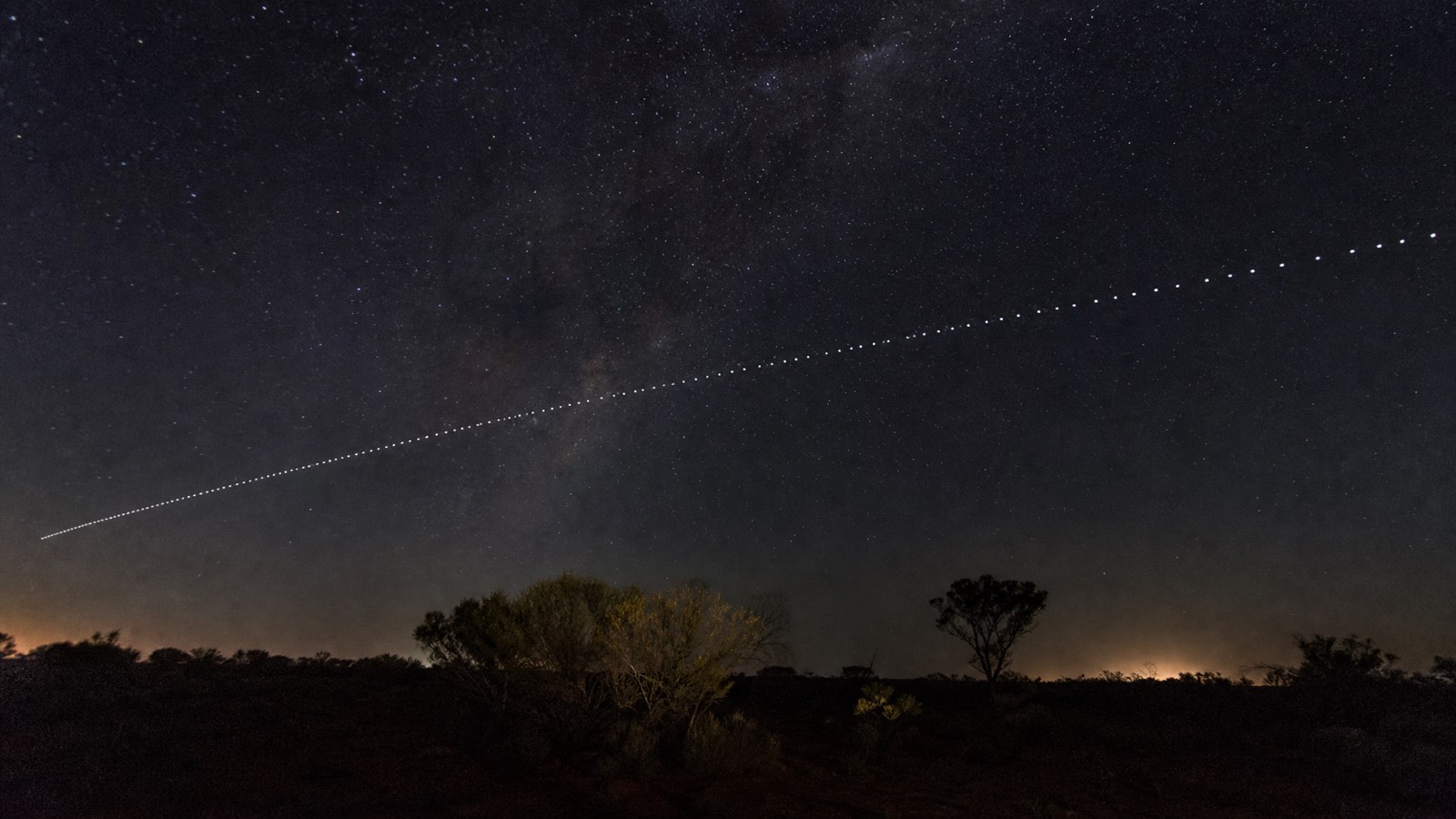
SpaceX put another 21 Starlink® satellites into orbit on the night of 2 March 2025, lifting off from Launch Complex 40 at Cape Canaveral Space Force Station in Florida. Thirteen of the 21 carry Direct to Cell hardware, which lets standard mobile phones connect through compatible carriers in places that have no tower coverage.
Mission details
The payload flew on a Falcon 9, with the first stage on its sixth flight. After stage separation the booster came back and landed on the drone ship Just Read the Instructions in the Atlantic. Reusing boosters is a big part of why SpaceX can run the Starlink launch cadence it does, and why the per-satellite cost keeps dropping.
Source: Wikipedia
Since the first operational Starlink batch in May 2019, SpaceX has launched more than 8,000 satellites, with over 7,100 currently active in low Earth orbit. The constellation is still the largest ever flown, and it grows almost weekly.
Weather and launch window
Conditions on the night were close to ideal. Forecasts gave a 90% chance of acceptable weather, with a clear sky, ground temperatures near 18 degC, and winds around 24 km/h. Falcon 9 launches have tight upper-level wind and lightning rules, so a clean window like that is worth more than it sounds.
Why Direct to Cell matters
The 13 Direct to Cell satellites are part of a slowly growing layer inside the wider Starlink constellation. They work with partner mobile carriers (Optus in Australia, T-Mobile in the US, and a handful of others) to provide text, and eventually voice and basic data, to standard 4G phones with no extra hardware. Coverage is patchy and rollout is staged, but for anyone driving outside town reception, even a delayed SMS getting through is a real change.
Direct to Cell will not replace a proper Starlink dish for streaming, hotspotting a family, or running a payment terminal at a remote campsite. The data rates are nowhere near it. What it does do is plug the obvious gap: when you are walking away from the vehicle, or when your dish is packed away, a normal phone keeps a thin link to the network.
What it means for remote internet in WA
For travellers and remote workers in Western Australia, each new batch keeps doing two useful things: it improves capacity in already-covered areas (so peak-time speeds hold up better as more users come online), and it slowly fills in the higher-latitude gaps that older shells did not service well.
If you are planning a trip through the Pilbara, the Kimberley, or the Goldfields and you want a real internet connection at camp rather than the patchy mobile signal you get near roadhouses, a Starlink Mini hire from Offgrid Internet is the simplest way to use the network this launch just helped expand. The hardware ships ready to plug in, and the plan is unlimited for the rental period.
For the engineering side of things, every successful 21-satellite batch is a reminder that the Starlink constellation is no longer a single project with a finish line. It is now an operating network with a maintenance cycle, and launches like this one are the routine upkeep.