
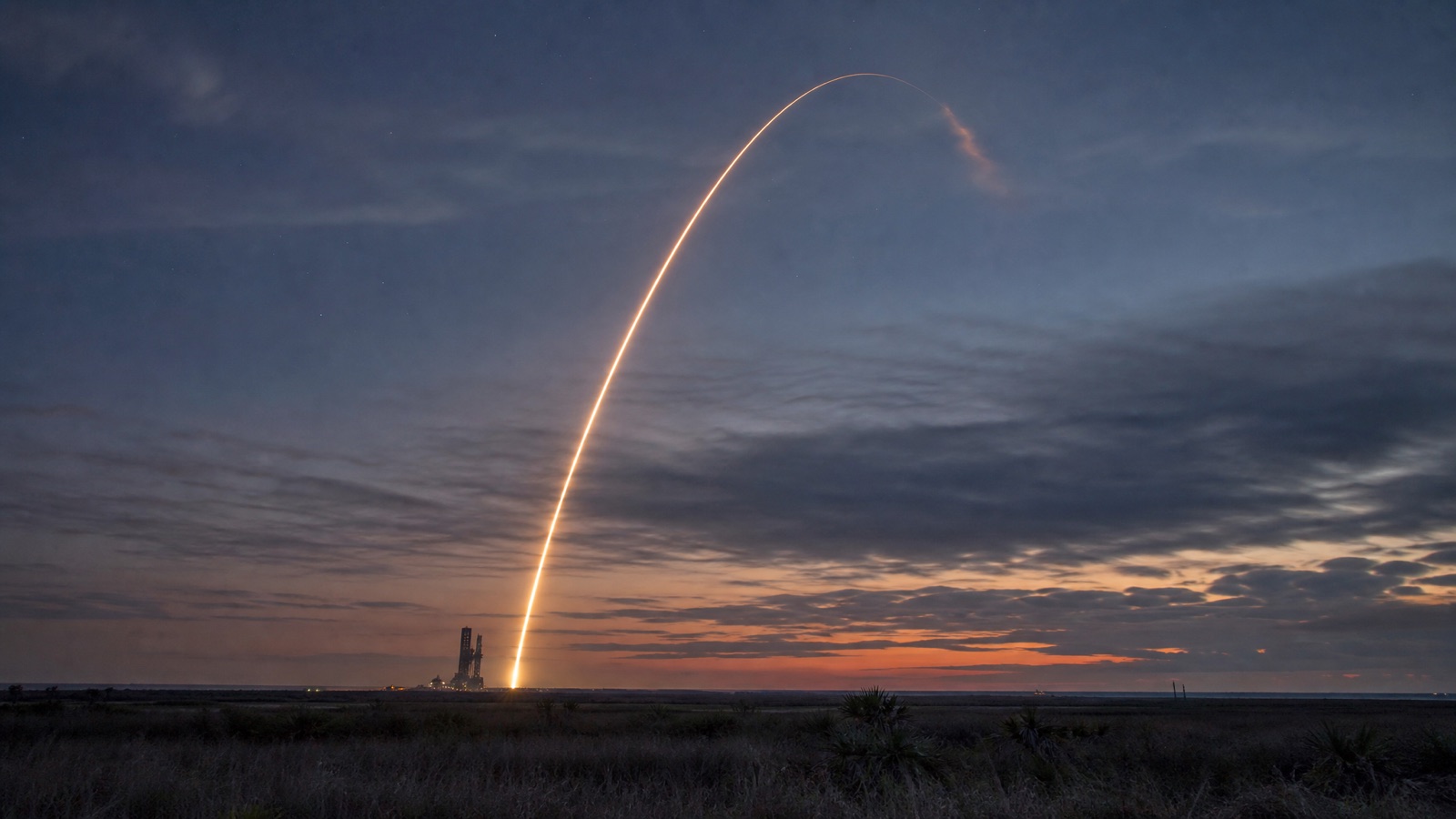
SpaceX has had a rough run of Starship tests, and the failures keep coming. For a company that sells us the Starlink® hardware we rent out across Western Australia, that matters: Starship is meant to put hundreds more Starlink satellites into orbit per launch.
What went wrong recently
On 3 March 2025, a Falcon 9 first stage landed successfully on a droneship off Florida, then caught fire at the base of the booster after touchdown. The stage was lost. Falcon 9 has hundreds of successful landings behind it, so a post-landing failure is unusual rather than routine.
Starship itself has had a tougher time. The upper stage on Flight 7 (16 January 2025) broke up over the Caribbean a few minutes into its burn, scattering debris across the Turks and Caicos area. Flight 8 on 6 March 2025 did the same thing again, losing the upper stage during ascent. Both were classed as Rapid Unscheduled Disassemblies, SpaceX’s term for an in-flight breakup.
The Super Heavy booster has been the more reliable half of the stack lately. SpaceX has now caught it back at the launch tower with the mechanical “chopsticks” arms more than once, which is genuinely new in orbital rocketry.
The Starship vehicle itself
Starship stands about 123 metres tall when stacked on Super Heavy, making it the largest rocket ever flown. It’s designed to be fully reusable, carry up to 150 tonnes to low Earth orbit, and eventually take crew to the Moon under NASA’s Artemis program and to Mars on SpaceX’s own timeline.
The failures so far are mostly in the upper-stage propulsion and thermal protection systems, which are the hardest parts of the vehicle to get right.
Why the failures aren’t the whole story
SpaceX builds rockets the way software companies ship code: launch early, break things, fix them, launch again. The previous major Starship setback before the 2025 run was in late 2024, and before that, a clean stretch back to late 2023. Each failure feeds telemetry and hardware data back into the next build, which is why prototypes are stacked and ready before the previous one even flies.
That’s a different model from traditional aerospace, where vehicles are tested to exhaustion on the ground before anything leaves the pad. It’s also why the failures get headlines older programs didn’t: you’re watching the iteration happen live.
What it means for Starlink (and us)
Falcon 9 is still doing the actual Starlink launches. The constellation is at over 7,000 active satellites and growing, so the service we resell isn’t going anywhere because of these Starship tests.
What Starship unlocks is the next generation of Starlink hardware, the larger V3 satellites that need a bigger fairing than Falcon 9 can offer. Those are the ones that significantly bump capacity, particularly in remote regions like the WA outback where we operate.
So the Starship cadence matters for the long-term roadmap, but the kit travellers rent from us today is unaffected.
The honest read
NASA is watching closely because Starship is on the critical path for crewed lunar landings, and there’s real schedule risk if the upper-stage problems take another year to solve. But writing SpaceX off after a few RUDs would be a mistake. The company has done this before with Falcon, with Dragon, with booster landings, and each one looked impossible until it didn’t.