How Elon Musk’s Starlink Generates Billions for SpaceX

Starlink flipped a classic space problem on its head: instead of selling launches to others, SpaceX built a constellation network that buys launches from itself and feeds a recurring revenue generation engine. The draw is simple. A fast satellite internet connection that reaches farms, fishing boats, mine sites, disaster zones, and dead mobile spots. The scale is not. Thousands of satellites, relentless technology innovation, and a distribution model that feels more like a gadget than telecom paperwork.
I have watched rural customers plug in a dish and go from 1 Mbps to true broadband service in under an hour. It changes how they work, study, and call for help. Behind that moment sits a business built to turn coverage into cash. Subscriptions, hardware sales, premium tiers, and a move into direct connections to phones are stacking up. Analysts expected 6.6 billion dollars of revenue in 2024, which signals a turning point for SpaceX’s cash needs. You’ll see how unit economics add up, why cheap launches matter, where risks show up, and what the next wave – direct to mobile – means for global coverage and SpaceX’s bigger goals.
En bref
- Recurring revenue from subscriptions now outweighs hardware sales for Starlink.
- SpaceX’s Falcon 9 reuse lowers cost per satellite, reinforcing the flywheel.
- Direct to mobile after a 17 billion dollar spectrum deal pushes Starlink into carrier territory.
- Capacity, pricing, and regulations remain the main threats, not demand.
- Better setup and weather awareness protect speeds and customer churn.
Starlink’s money machine: subscriptions, hardware, and high-margin services
Let me paint a simple picture. A family in a remote valley orders a kit, pays for the dish, then pays monthly for fast broadband service. Multiply that by millions and you get a stable, growing stream of cash. That simplicity hides a blended margin story. Hardware starts the relationship, subscriptions carry it. Premium tiers and business features add lift on top.
Analysts have tracked Starlink climbing toward strong top line numbers. One report pegged 2024 revenue around 6.6 billion dollars, a sign the subscriber base and enterprise mix are maturing. Another breakdown of how the business model works shows the core levers: user equipment pricing, monthly plans, business and maritime tiers, and new direct-to-mobile services. The gears mesh because SpaceX controls design, production, and launch cadence.
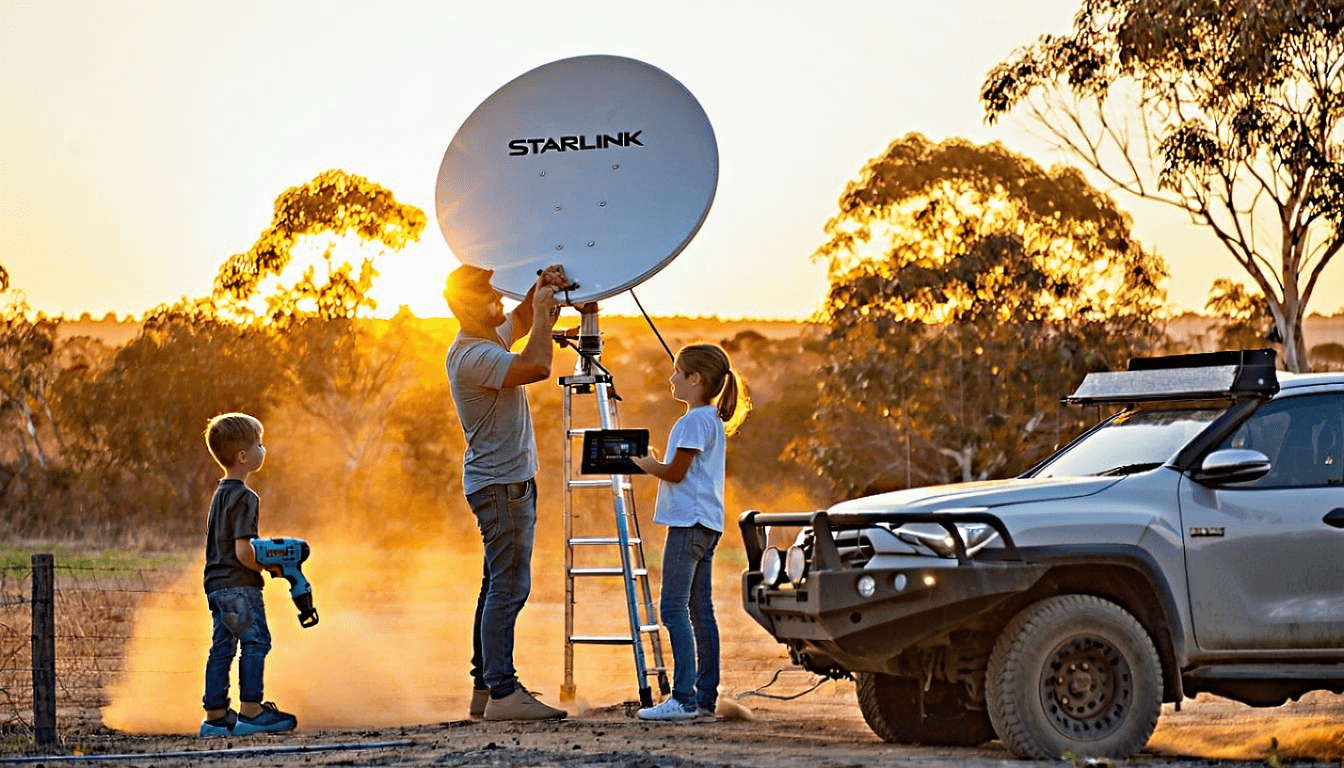
From a product view, Starlink sells a clear promise: easy install, real speed, wide global coverage. Here in Western Australia, I met Maya, who runs a small eco-lodge off the highway. She swapped an old fixed wireless link for Starlink using this antenna installation guide and had Wi‑Fi in an afternoon. Her guests finally streamed movies without grief. That quick win is the hook. The stickiness comes from consistent performance and simple billing.
For SpaceX, the next boost is direct-to-mobile. Buying spectrum opens a path to bill small add-ons at scale. Think emergency texts, basic messaging in blackspots, or a travel add‑on that follows you. Several outlets covered how the company moved closer to this target after a major spectrum deal. Another piece explains how 17 billion dollars later, the direct‑to‑mobile path looks real.
Demand is not the issue. The choke points are capacity per cell, ground network backhaul, and user density. Critical voices have flagged these pain points, including a French analysis on capacity and affordability. Starlink is adding satellites and laser links to address this, but economics still come down to how many heavy users sit in a cell and what they pay.
If you want a clear, non‑marketing take on where the money comes from, a helpful primer is this Starlink satellite internet overview. For a quick narrative on the leap from idea to multi‑billion cash engine, this article frames it well: how Starlink is bringing in billions. Both match what I’ve seen in the field: hardware starts the flywheel, subscription dollars keep it spinning.
How the unit economics work in plain terms
Think upfront cost for kit, recurring ARPU, churn, and network cost per bit. Lower launch costs reduce depreciation per satellite, which lowers cost per user. Higher tiers push ARPU. Better install guides cut support cost and reduce churn. It’s a chain reaction that turns space hardware into a consumer service.
| Revenue Stream | Customer Value | Margin Driver | Notes |
|---|---|---|---|
| Hardware kit | Fast start, self install | Scale manufacturing | One‑time cash, sets the hook |
| Residential plan | Stable speeds at home | Low support, auto billing | Core recurring revenue |
| Business tier | Priority bandwidth, SLA | Higher ARPU | Upsells for sites and fleets |
| Mobile and RV | Portable connectivity | Seasonal demand | Sticky among travelers |
| Direct to mobile | Texting in dead zones | Mass market scale | Spectrum deal is the key |
Is Starlink already cash flow positive?
Elon Musk said the service crossed a key threshold, echoed by coverage that Starlink hit a step toward profitability. We do not see audited numbers, but rising subs and falling costs line up with that claim. The real test will be sustaining margin as density grows in suburbs.
The SpaceX flywheel: Starlink launches that pay for themselves
SpaceX runs a rare loop. Starlink needs satellites. Falcon 9 can lift them often and cheaply. Starlink subscriptions fund more launches, which boost capacity and quality, which attract more users. That loop makes Starlink not just a product but an anchor customer that fills space technology hardware with in‑house demand.
If you’ve watched a launch stream, you know the cadence. Booster lands, fairings are reused, and the next batch of satellites heads up. This launch‑driven network growth has turned Falcon 9 into a regular delivery truck. It solves a logistics problem that used to stop satellite internet from scaling: cost per kilogram. The result is not just more satellites, but faster iteration of hardware in orbit.
Media have called the system powerful and somewhat intimidating for competitors. A French feature called it a mighty constellation, which matches the vibe engineers feel when they see launch numbers stack up. Reuse cuts the marginal cost per satellite, so SpaceX can afford to launch often without waiting for outside customers to fill the manifest.
Here’s the catch. Frequent launches must translate into real user benefits. That means lower latency via laser links, better polar coverage, fewer dead spots, and higher resilience when a satellite fails. If you run a mine site with hundreds of workers, you need that redundancy. Each added plane in orbit is another safety net.
Engineers also keep an eye on orbital traffic. With thousands of objects in similar shells, collision avoidance and end‑of‑life disposal matter. There is ongoing debate about risk by 2035, and if you want a grounded take, read this note on satellite density and hazards. It’s relevant because long term sustainability affects insurance, operating costs, and permissions that feed back into the business loop.
What a self‑funded launch cadence unlocks
Lower latency, more cells per region, and redundancy for fiber cuts are the obvious perks. Less obvious perks include faster replacement of underperforming hardware and the freedom to shift coverage as demand patterns change. Think seasonal tourism or maritime lanes adjusting to new routes.
| Flywheel Link | Effect on Users | Effect on Costs | Business Outcome |
|---|---|---|---|
| Cheap launches | Faster upgrades | Lower per‑satellite cost | Competitive pricing |
| More satellites | Denser coverage | Higher capex upfront | Capacity where needed |
| Better service | Lower churn | Lower support per user | Higher lifetime value |
| Rising revenue | New features | R&D flywheel | Moat widens |
Watch a few launch analyses and you can almost feel the loop tighten. Each success pays for the next. It is industrial rhythm tuned to a telecom market that used to be allergic to rockets.
How does direct-to-mobile turn Starlink into a global operator?
Direct-to-mobile shifts Starlink from a dish‑based service to a hybrid carrier that reaches every pocket. The big move was spectrum. SpaceX spent heavily to acquire licenses tied to EchoStar. Coverage in the press described a 17 billion dollar transaction. Another outlet summed up the aim clearly: Elon Musk wants to make Starlink a global mobile operator. A Swiss daily traced how buying 5G‑related rights pulls Starlink closer to competing with terrestrial carriers from space, see this report.
What does that mean on your phone? Basic messaging, emergency alerts, and low‑bitrate apps in dead zones, with no special handset. In phase one, it likely feels like satellite SMS baked into your plan. Over time, bandwidth goes up as more satellites with proper payloads fly. The upside is huge. Billions of phones, even if only a small monthly add‑on is charged, can add another strong leg of revenue generation.
Let’s make it concrete. Picture a hiker trapped in a canyon, still able to text. A supply truck in the outback pings location and gets a short instruction. A farmer gets a weather alert before a storm rolls in. I have friends on cattle stations who would happily pay a few dollars a month for that safety net. The same applies to fishermen along the coast.
Carriers will not sit still. Some will partner, others will try to block or slow the service via regulators. A French piece in Le Monde asked how terrestrial operators react to Starlink’s shadow from orbit, see this analysis. Expect country‑by‑country debates about spectrum sharing, interference, and fair competition.
Why direct-to-mobile matters for ARPU and churn
It adds a safety feature customers value emotionally, which is sticky. It also removes the need for extra gear on casual trips, which widens the funnel. For businesses, it hardens operations with backup links for field teams.
| Use Case | Customer | Willingness to Pay | Churn Impact |
|---|---|---|---|
| Emergency texting | Hikers, boaters | Low monthly add‑on | Strong retention driver |
| Blackspot messaging | Rural workers | Bundled with plan | Reduces plan switching |
| Logistics pings | Fleets, farms | Per device fee | Locks in enterprise |
| Travel add‑on | Tourists | Day or week pass | Seasonal stickiness |
There is one more angle. Direct-to-mobile helps in disasters when towers fail. Fast status checks, even at text speed, let crews coordinate. That goodwill is hard to buy with ads.
- Start with low‑bit services like SMS, then grow bandwidth as satellites upgrade.
- Use pricing that feels like a safety belt, not a luxury tax.
- Work with national carriers to ease roaming and billing friction.
- Publish interference tests early to calm regulators.
- Bundle with enterprise fleet tools to prove value fast.

Who can stop Starlink? Capacity limits, rivals, and regulation
Three forces can slow Starlink’s climb: physics, competition, and policy. Physics shows up as finite capacity per cell and latency that still beats old GEO satellites but cannot beat fiber locally. Competition has sharpened, with Amazon Kuiper shipping hardware and preparing service zones. Policy shapes spectrum, safety, and local licensing.
Let’s start with rivals. Amazon’s European plans drew attention, and this summary of how competition heats up lists the main pressure points: retail reach, bundled services, and deep pockets. Kuiper can leverage Prime households and AWS edges in a way that fits consumer and enterprise spend. Starlink still holds the launch edge and a live customer base, but the gap will narrow in some markets.
Capacity remains the tougher challenge. If a suburban cell fills with heavy users, speeds dip. I have seen this in ski towns at peak season. Critics argue that rosy projections assume uniform usage that real life rarely delivers. A French tech forum pulled together a case that capacity and affordability still strain the model. The response so far is more satellites, better laser interlinks, and priority tiers that shape traffic.
Policy is a minefield. Each country has different rules. Some welcome coverage, others want local control. A helpful roundup on the political climate shows how expansion faces political hurdles. You will see themes repeat: national security, rural subsidies, and fair competition with incumbents. Operators will lobby hard if direct‑to‑mobile threatens roaming cash cows.
The press also watches the sector with a wary eye. One headline framed Starlink as casting a shadow over operators, see this piece. That shadow comes from a service that works without permits for towers, and from an owner, Elon Musk, who is not shy about moving fast. It creates friction, then deals, then copycats.
What comparisons actually matter
Customers compare Starlink to 4G or fiber where those exist, and to nothing where they do not. That split is the real market map. Starlink wins on reach and setup speed. It loses where cheap fiber is already in place. For speed, look at real tests like these Perth and WA results. For reliability, weather and install matter more than website specs.
| Option | Where it Shines | Where it Struggles | Business Fit |
|---|---|---|---|
| Starlink | Remote or mobile sites | Dense urban apartments | Primary or failover link |
| Fiber | Urban and suburban | Rural build cost | High throughput core |
| 4G/5G | Portable on roads | Blackspots, congestion | Backup, mobile teams |
From what I see in the field, blending links is common. Fiber at HQ, Starlink at outposts, and 4G on the move. The winner is the one that fails least and recovers fastest.
Why does Starlink performance vary and what can you do?
Performance shifts because the sky, your setup, and your local cell all affect signal and throughput. Trees and roofs block line of sight. Snow and heavy rain add attenuation. A dish mounted low takes longer to find a clean view and will drop out more often. Add peak hours when neighbors stream, and you can see speed swing.
Start with the basics. Get the mount right, keep the dish clear, and use short, clean cabling. A practical install guide shows the difference a better angle and higher mast can make. If you want a deeper check, look at regional speed tests like these Western Australia results to set expectations for your area.
Weather is a wildcard. Light rain has little impact, but thunderstorms and wet snow can dent speeds. You can see how meteorology plays in this explainer on weather and Starlink speeds. In our lodge example, Maya learned to schedule big downloads outside evening storms, and the difference was clear.
If speeds dip often, work through common faults. A handy checklist on setup issues and fixes covers misaligned mounts, bad cables, router placement, and obstructions. I add one more tip: check Wi‑Fi congestion inside the house. Many times the satellite link is fine and the bottleneck is an old router channel clashing with your neighbor’s gear.
Looking ahead, hardware updates can lift performance without you touching anything. Starlink’s next generation has been framed as a bigger jump in capacity and efficiency. Every new batch of satellites improves the average experience for the whole footprint, even if your dish is the same.
Why is my Starlink slow right now?
Ask three questions. Is the dish clear of obstructions? Is the weather nasty? Is it peak time in your area? If the answers are yes to any of these, you have a likely cause. Fix what you can – move the dish, wait out storms, or shift heavy tasks to off‑peak. If problems persist daily, open a support ticket with timestamps and screenshots. That shortens the back‑and‑forth.
| Symptom | Likely Cause | Quick Fix | Longer Term |
|---|---|---|---|
| Drops every hour | Obstruction or loose mount | Raise mast, tighten bolts | Relocate to clear sky |
| Good ping, low throughput | Wi‑Fi congestion | Change router channel | Add wired backhaul |
| Evening slowdowns | Cell congestion | Schedule downloads | Consider priority plan |
| Storm‑related drops | Heavy rain or snow | Wait or clear snow | Install heat kit |
Think of performance as a shared effort between your setup and the sky. Get your part right and you will ride the network’s upgrades with fewer headaches.
What Starlink’s billions mean for SpaceX in 2025 and beyond
Money from Starlink gives SpaceX freedom. It funds more launches, R&D on bigger rockets, and the massive ground work required to keep a global network running. Reports of surging revenue, like this estimate of 6.6 billion dollars, show how far the service has come. Musk himself said Starlink crossed a profitability milestone, echoed in coverage that the unit inched toward the black. Put bluntly, recurring telecom cash calms the feast‑and‑famine cycle many space firms live with.
There is a strategic shift too. With direct‑to‑mobile, Starlink moves closer to being a carrier. That changes how regulators see SpaceX. It also changes how investors value the whole group. A thoughtful long read on the ambition to rival telecoms from orbit is here: Starlink and 5G licenses. Another report asked how traditional operators react to a sky‑based competitor, see this analysis. The short version: partnerships in some places, fights in others.
Inside the company, recurring revenue reduces pressure to raise funds at tough moments. That matters if SpaceX needs longer runways for high‑risk projects. It also attracts talent and suppliers who prefer steady demand. Every subcontractor I speak with says the same: a predictable forecast beats a flashy one‑off order.
Risks remain. Political blowback can slow rollouts. This overview of global hurdles is a sober checklist. Spectrum disputes can drag. Space traffic management rules may tighten. Rival constellations will find their product market fit. Yet the core moat – cheap launches and rapid iteration – is hard to copy quickly.
If you like operator lore, you’ll enjoy this narrative of how Starlink funnels billions into SpaceX. It echoes what I see from customers: pay for service that works, use it every day, and forget the rocket science behind it. That quiet loyalty is the real prize.
The road markers to watch next
Keep an eye on three things in the next year. Direct‑to‑mobile availability by country, enterprise adoption in logistics and energy, and backlog for priority tiers in crowded regions. Those signals will tell you if ARPU climbs while churn stays low.
| Milestone | Why it Matters | Signal to Track | Source to Watch |
|---|---|---|---|
| Direct‑to‑mobile rollout | New mass market revenue | Carrier partnerships | National regulator updates |
| Capacity upgrades | Better peak speeds | New satellite batches | Launch logs and NOTAMs |
| Enterprise wins | High ARPU and low churn | Energy and fleet deals | Earnings and blogs |
| Policy shifts | Fewer delays | Cross‑border approvals | Trade press and filings |
In short, Starlink’s steady cash turns SpaceX from a launch vendor into a diversified operator. That shift gives SpaceX room to build, test, and take smart risks while paying the bills with a service people use daily.
Is Starlink available in my area?
Coverage now spans most continents with ongoing expansion. Check the live map in your account and local forums. Real‑world tests like Western Australia speed reports help set expectations for your region.
Does weather affect Starlink speeds?
Light rain has little impact, but heavy rain and wet snow can slow links. Clear the dish, wait out storms, and consider a heat kit in snowy zones. See the weather explainer for practical tips.
Will direct-to-mobile work on my current phone?
Yes for basic messaging in supported areas once service goes live. No special handset. Expect limited bandwidth at first, then upgrades as more satellites launch.
How does Starlink compare to fiber?
Fiber wins on latency and price where it is built. Starlink wins on reach and quick install. Many businesses run both – fiber at HQ and Starlink for remote sites or as a failover.